Pepper
Home / Pepper
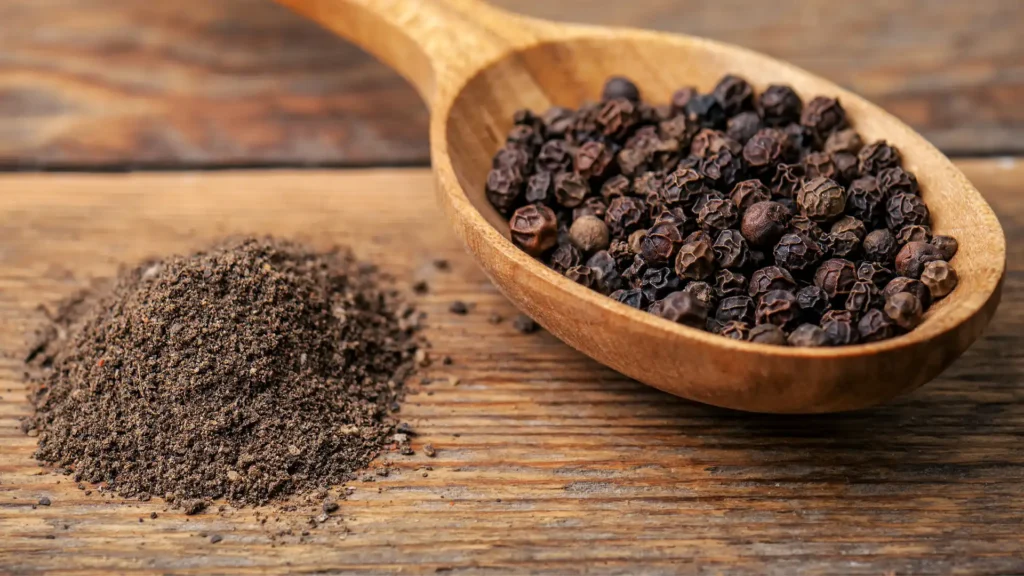
Pepper is the spice that is used the most around the world. It is called the “King of Spices” because it makes up the largest share of the international spice trade. In its most common form, which is called “Black Pepper,” it has a strong, pungent smell and a spicy taste that people all over the world love and use in many different ways. This strong smell comes from volatile oils that can sometimes be lost during processing. The most important of these is called “Piperine,” and Sri Lankan pepper has a lot of it.
Pepper comes from the plant Piper nigrum, which is in the family Piperacea. It is a perennial, evergreen climbing vine that can grow many meters high when it is supported by a tree or post. The farmer usually provides the support plant or post, and the plant needs to grow for 3–4 years before it can produce its first crop. Pepper is made from the plant’s berries, which are drupes that are about 5 mm long and have a single large seed in the middle. The berries are picked when they are ready but before they turn red so they can be used.
The different colors of pepper you can buy at the store come from the different ways they were processed. The pepper berries are dried in the sun to make “black pepper.” The berry’s skin dries out, shrinks, and turns black because of this. When the fresh berries are put in a brine bath, the skin comes off, revealing the white kernel inside. This is what gives white pepper its name. Other methods of processing make other things, like green pepper and pepper in brine.
Sri Lankan pepper is also often used to get pepper oil, which is best done with the young, less ripe “Light Berries.” The less dense (less Grams per Liter) these berries are, the more likely they are to have a high Piperine Content, which is perfect for Oil extraction.
Pepper is grown on 37,500 hectares of land in Sri Lanka, which are spread out over several districts like Matale, Kandy, Kegalle, Kurunegala, and Nuwara Eliya. Pepper is a very seasonal crop that is only grown once a year. However, because of the different climates in these different districts, the seasons happen at different times, so Sri Lankan pepper is available for a longer time each year.
Black pepper comes in four grades: 550GL, 525GL, 500GL, and 470GL (300GL to 430GL)
White pepper comes in grades 630GL and higher, 575GL-600GL.
The Health Benefits of Black Pepper
-
- Peppercorns include a long list of chemical compounds produced from plants, many of which are recognized to have disease-fighting or health-promoting effects. Because of the pepper’s anti-inflammatory, carminative, and anti-flatulent effects, people have been using them for millennia.
- Peppercorns are composed of beneficial essential oils such as piperine, which is an amine alkaloid that gives pepper its robust, pungent, and spicy flavor. In addition to this, it has a high concentration of monoterpene hydrocarbons, including sabinene, pinene, terpenene, limonene, and mercene, all of which contribute to the pepper’s distinctively fragrant quality.
- Via an increase in the release of digestive enzymes in the gastrointestinal tract, the active ingredients in pepper have the potential to both stimulate the movement of the gastrointestinal tract and improve digestion. It has also been discovered that piperine can boost the body’s absorption of selenium, vitamins B complex and beta-carotene, in addition to the absorption of other nutrients from the meal.
- Black peppercorns have a healthy number of minerals such as potassium, calcium, zinc, manganese, iron, and magnesium, which are all necessary for a healthy and well-balanced diet.
- In addition to that, they are a wonderful source of numerous necessary B-complex vitamin groups, including pyridoxine, riboflavin, thiamin, and niacin.
- Peppercorns are an excellent source of a variety of anti-oxidant vitamins, including vitamin C and vitamin A. They are also abundant in flavonoid polyphenolic anti-oxidants like as lycopene, zea-xanthin, carotenes, and cryptoxanthin. These substances assist the body in eliminating cancer-causing free radicals and also provide some protection against other diseases and malignancies.